
The Generative Engine Optimization (GEO) Playbook: How Creators Will Train AI to Find Their Content and Win Zero-Click Search in 2026
Traditional SEO is dead—long live Generative Engine Optimization (GEO). With AI Overviews and conversational assistants (Gemini, ChatGPT, Claude) answering up to 80% of searches with "zero clicks," creators face an extinction-level event. This playbook details the shift from optimizing for Google's ranking algorithm to optimizing for the AI’s learning model, focusing on E-E-A-T, Structured Data, and the "Answer Block" strategy.
THE CREATOR ECONOMY & DIGITAL MARKETING
Apex Digital Content Writing Team
12/2/20253 min read
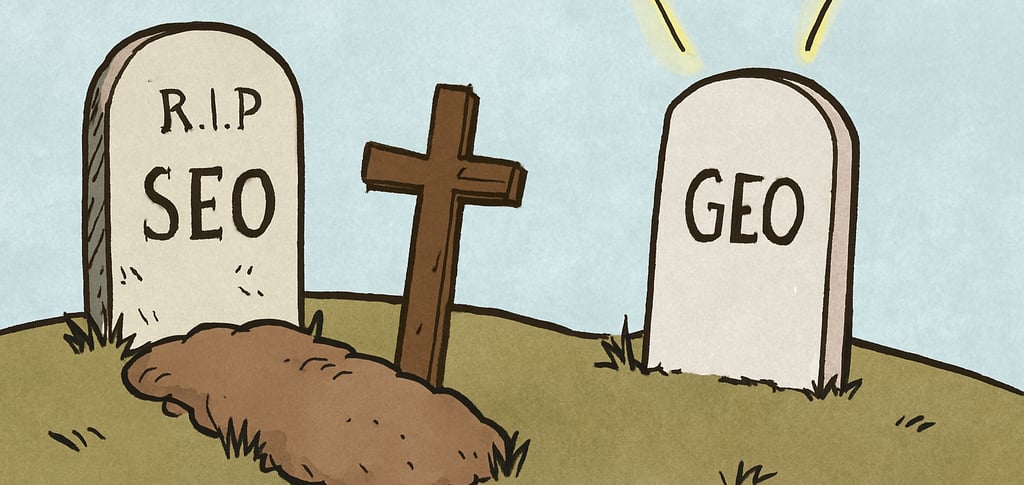
I. The Zero-Click Crisis: Why Content Creators Must Evolve
The core mechanism of the digital economy—the click that delivers traffic and revenue—is breaking [2]. When a user asks a factual or complex question on Google, the search engine often serves up a summary, sometimes called an AI Overview or AI Answer, powered by a Large Language Model (LLM) like Gemini. This shift accelerates the "zero-click" trend, where the user gets the answer without ever visiting a website.
For the modern creator, success is no longer about ranking #1 in the traditional ten blue links; it’s about becoming the Authoritative Source that the AI chooses to reference, cite, or use as the foundational knowledge for its summary [4].
This is the imperative of Generative Engine Optimization (GEO): the practice of adapting your content strategy and technical infrastructure to influence what the generative AI thinks and says about your topic [1, 4].
II. The New Search Logic: From Keywords to Entities and Trust
Traditional SEO focused on keywords, backlinks, and domain authority. While these technical fundamentals still matter, GEO adds three new layers that determine AI visibility:
1. Trust and E-E-A-T (Amplified)
The Shift: AI models are explicitly trained to avoid generating misinformation [4]. They heavily prioritize content based on established signals of trust. Google’s E-E-A-T framework (Experience, Expertise, Authoritativeness, and Trustworthiness) is amplified exponentially [3, 4].
The GEO Strategy: Ensure every piece of content is backed by verifiable data, cited sources, and a clear, credible author biography that showcases your qualifications. Pages authored by certified professionals are far more likely to be selected by the AI as a definitive source than generic, anonymous content [4].
2. Semantic Comprehension and Entities
The Shift: LLMs understand the relationships between things (called Entities), not just the words themselves [3]. They look for context, nuance, and connections between concepts.
The GEO Strategy: Move beyond simple keyword matching to Semantic Depth. Write comprehensive content clusters that cover every facet of a topic. Use clear, specific terminology and reinforce the relationships between your products, services, and core concepts across your entire site [2].
III. The GEO Playbook: Three Actionable Optimization Rules
To become "machine-friendly," creators must fundamentally change how they structure their content, making it easier for AI to consume, synthesize, and cite:
Rule 1: Optimize for Structured Data and the Knowledge Graph
The Imperative: Structured data is metadata that helps machines understand exactly what they’re looking at (e.g., this is a definition, this is a step-by-step guide, this is the author’s name) [1].
The Action: Aggressively implement Schema Markup for key content types:
FAQ Schema: Explicitly highlights questions and answers for immediate AI extraction.
How-To Schema: Breaks down processes into numbered steps, ideal for AI Overviews that provide step-by-step guidance.
Article/Video Object Markup: Ensures the AI recognizes the format, which is essential for multimodal search [1, 2].
Rule 2: Adopt the "Answer Block" Writing Style
The Imperative: AI models look for clear, concise, and quotable blocks of text that directly answer a user’s question [2, 3].
The Action: Structure your content to be snippet-first:
Question-Based Headings: Frame your H2s and H3s as the exact questions users are asking (e.g., "What is Generative Engine Optimization?").
Immediate Answer: Place a definitive, 40–60 word answer immediately below the heading, followed by detailed elaboration. This highly structured format is what AI systems prefer to quote [3, 5].
Rule 3: Build Authority in the "AI Dark Funnel"
The Imperative: A significant amount of early-stage research is now happening inside AI chats (the "AI Dark Funnel"), which traditional analytics can't track [1]. You need to make your brand visible here.
The Action: Systematically close Citation Gaps [1]. Since AI models are increasingly trained on user-generated content for context and social proof, build up mentions and attributed expertise in:
Niche Forums and Communities: Where human experts gather.
Q&A Platforms (Reddit, Quora): Actively answer questions using your brand as the expert source.
Authoritative Niche Media: Seek opportunities for guest articles or expert quotes.
By focusing your optimization efforts on making your content clean, structured, and demonstrably trustworthy, you shift your content from merely being indexed by Google to being integrated and cited by the LLMs that power the future of search.
References
[1] Primotech. (2025). "Generative Engine Optimization: Boost AI Visibility 2026." Primotech Blog. (Discusses GEO definition, citation gaps, and prompt analysis). [2] Single Grain. (2025). "Zero-Click SEO Strategies for AI Answers and SERP Citations." Single Grain Blog. (Details the zero-click crisis, entity-first models, and citation strategy). [3] Semrush. (2025). "How to Optimize Content for AI Search Engines [2026 Guide]." Semrush Blog. (Emphasizes E-E-A-T, snippet optimization, and question-based formatting). [4] Purge Digital. (2025). "Is Generative Engine Optimisation (GEO) the New SEO in 2026?" Purge Digital. (Highlights the amplification of E-E-A-T and the core goal of being the definitive source). [5] Writer. (2025). "GEO & AEO SEO: Generative & Answer Engine Optimization." Writer Blog. (Focuses on structured content, question-based H2s, and machine-friendly formatting).